Nutrition & Care
The content of this section is not part of the statutory audit of the annual financial statements but has undergone a separate limited assurance by our auditor.
The content of this section is voluntary, unaudited information, which was critically read by the auditor.
The Nutrition & Care segment consists of the Care Chemicals and the Nutrition & Health divisions. It serves the growing demands of food and feed producers and of the pharmaceutical, cosmetics, detergent and cleaner industries. We leverage the BASF Verbund to offer innovative products, combining performance with beneficial sustainability profiles. We strive to expand our position as a leading provider of essential ingredients in the areas of nutrition, home and personal care, as well as for technical applications, mainly through organic growth based on global production capacities. We are focused on markets with long-term growth potential.
At a glance
€649 million
EBITDA before special items
2024: €814 million
-€67 million
Segment cash flow
2024: -€31 million
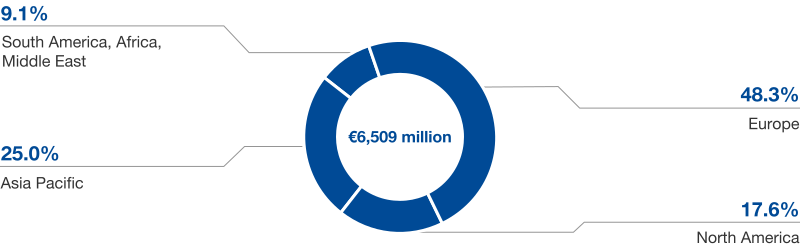
Sales in the Nutrition & Care segment amounted to €6,509 million in the 2025 business year, a decrease of €221 million, primarily due to the decline in sales in the Nutrition & Health division. The Care Chemicals division, on the other hand, recorded a slight improvement in sales, mainly due to positive price trends.
|
Nutrition & Care |
Care Chemicals |
Nutrition & Health |
|---|---|---|---|
Volumes |
–2.3% |
–1.5% |
–4.2% |
Prices |
1.4% |
3.1% |
–2.6% |
Currencies |
–2.4% |
–2.2% |
–3.1% |
Portfolio |
0.0% |
0.9% |
–2.0% |
Sales |
–3.3% |
0.3% |
–11.8% |
Volumes declined in both operating divisions. In the Nutrition & Health division, volumes for vitamin A, vitamin E and carotenoid products affected by the fire at the isophytol plant in July 2024 were below the prior-year level. While inventories were initially sold off, volumes fell short of the previous year, especially in the first half of 2025. Production was steadily increased from the second quarter of 2025; this meant that production levels had largely normalized by the end of the year. Significant volume growth in almost all other business areas, particularly in the pharmaceutical business, could only partially offset this effect. In the Care Chemicals division, sales volumes declined as a result of lower demand, especially in home care and industrial & institutional cleaning and in the oleo surfactants business area.
In addition, negative currency effects, mainly from the U.S. dollar, dampened the segment's sales.
Higher prices in the Care Chemicals division, mainly driven by the positive development in the oleochemical surfactants business area, counteracted the overall sales trend. The Nutrition & Health division, on the other hand, recorded a price decline, especially in the pharmaceutical business.
The sale of the food and health performance ingredients business had a negative portfolio effect in the Nutrition & Health division. This was counterbalanced by positive effects in the Care Chemicals division resulting from a change in the business model of BASF-YPC Company Ltd., Nanjing, China, which is accounted for using the equity method.
EBITDA before special items decreased significantly compared to the previous year due to the decline in earnings in the Care Chemicals division. The operating division's earnings were impacted primarily by a lower contribution margin in almost all business areas, especially personal care. EBITDA before special items in the Nutrition & Health division, on the other hand, increased as a result of lower fixed costs related to the fire at the isophytol plant in the previous year and the associated insurance refunds in 2025.
Special charges in EBITDA from a large number of items were partially offset by the gain from the sale of the food and health performance ingredients business.
Compared to 2024, segment cash flow declined significantly overall. The Nutrition & Health division recorded negative working capital effects as a result of the fire at the isophytol plant; following a reduction in inventories due to the sell-off of the affected products in the previous year, inventories were successively built up again in 2025. Cash flow in the Care Chemicals division declined mainly due to lower EBITDA.
Million € |
|
2025 |
2024 |
+/– |
||||||||||
|---|---|---|---|---|---|---|---|---|---|---|---|---|---|---|
Sales to third parties |
|
6,509 |
6,729 |
–3.3% |
||||||||||
of which Care Chemicals |
|
4,765 |
4,751 |
0.3% |
||||||||||
Nutrition & Health |
|
1,744 |
1,978 |
–11.8% |
||||||||||
Intersegment transfers |
|
452 |
446 |
1.3% |
||||||||||
Sales including transfers |
|
6,961 |
7,176 |
–3.0% |
||||||||||
EBITDA before special items |
|
649 |
814 |
–20.3% |
||||||||||
Special items in EBITDA |
|
–19 |
5 |
. |
||||||||||
EBITDA |
|
630 |
819 |
–23.1% |
||||||||||
EBITDA margin before special items |
% |
10.0 |
12.1 |
. |
||||||||||
Depreciation and amortizationa |
|
554 |
599 |
–7.5% |
||||||||||
EBIT before special items |
|
133 |
273 |
–51.4% |
||||||||||
Special items in EBIT |
|
–57 |
–53 |
–8.4% |
||||||||||
Income from operations (EBIT) |
|
76 |
220 |
–65.7% |
||||||||||
Investments including acquisitionsb |
|
662 |
809 |
–18.2% |
||||||||||
Segment cash flow |
|
–67 |
–31 |
–119.3% |
||||||||||
Assets (December 31) |
|
7,610 |
7,887 |
–3.5% |
||||||||||
Research and development expenses |
|
137 |
149 |
–7.6% |
||||||||||
|
||||||||||||||
Nutrition & Care – sales by region
By location of customer