
S1 Own Workforce1
The content of this section is not part of the statutory audit of the annual financial statements but has undergone a separate limited assurance by our auditor.
The content of this section is voluntary, unaudited information, which was critically read by the auditor.
ESRS-Kennzeichnung:
Our employees are crucial to BASF’s success. We want to attract talented employees, support them in their development and retain them for the long term – in a working environment that inspires and connects. This is founded on an open corporate culture of mutual trust, respect and dedication to top performance.
ESRS-Kennzeichnung:
This chapter refers to employees who were employed in a company within the BASF Group’s scope of consolidation as of December 31, 2025. We report figures on our employees under Metrics. In our double materiality assessment, the Own Workforce topic was defined as material. In this context, we identified material impacts on employees and risks and opportunities for BASF (see the following table). We explain the associated policies and measures under Strategy and Governance. We systematically record opportunities and risks as part of our general opportunity and risk management (for additional information, see Opportunities and Risks).
Impact |
Evaluation |
Position in the value chain |
Description |
|---|---|---|---|
Potential health and safety risk |
Negative, |
BASF’s own operations |
Our employees are exposed to a potential health and safety risk if they work in laboratories and production plants and handle chemicals, including hazardous substances. This is particularly the case if occupational health and safety instructions or regulations in our production processes are not followed. |
Promoting health and safety awareness |
Positive, potential |
BASF’s own operations |
High standards of occupational safety and health have a positive effect on the well-being, safety and resilience of employees. Health programs and safety training enable us to promote safety and health awareness that extends beyond the working environment. |
Adequate and competitive compensation |
Positive |
BASF’s own operations |
Our market-oriented compensation and corresponding additional benefits create attractive working conditions for our employees and make a positive contribution to society. |
Risks and opportunities |
Evaluation |
Description |
|---|---|---|
Loss of critical skills and competencies |
Negative |
Demographic and technological change, changing competence profiles and intensified competition for skilled employees and leaders can lead to a loss of skills and knowledge in key roles within our workforce or affect our ability to adequately and quickly develop them. |
Unlocking potential through strong leadership |
Positive |
We promote excellent leadership through targeted development offers for leaders at all levels. Leaders can positively influence the engagement of their employees and, together with their teams, contribute productively and efficiently to the implementation of our strategic corporate targets. |
Challenges for engagement and retaining skilled employees |
Negative |
The current economic situation and any resulting structural adjustments at BASF can lead to uncertainty among employees. This poses challenges for the company, for example in terms of maintaining employee engagement. Any supposed decline in the attractiveness of BASF as an employer can make it more difficult to recruit appropriately qualified specialists and managers in global competition. |
1 According to the ESRS definition, a company’s own workforce are employees and nonemployee workers (such as agency workers and freelancers). For the 2025 business year, this chapter refers only to employees.
Strategy and Governance
ESRS-Kennzeichnung:
The “Winning Ways” strategy is our plan for BASF’s long-term business success (see Our Strategy). As part of this strategy, we are driving development toward a performance culture. After all, we can only achieve BASF’s targets with a high level of engagement from our skilled employees and leaders. With our adequate and competitive compensation, we want to contribute to attractive working conditions at BASF and thus attract and retain engaged employees.
Feedback from our employees or their representatives is obtained via various formats and can thus be considered in the development of our strategic direction (see Engaging with employees and their employee representatives, Challenges for engagement and retaining skilled employees and Global Targets). For example, internal employee surveys indicated that processes were perceived to be too complex or bureaucratic. Also therefore, in our strategy we put emphasis on accelerating and becoming more agile.
The health and safety of our employees is our highest priority and forms the basis of our corporate responsibility and our license to operate. However, working in a chemical company entails potential health and safety hazards, which we address with policies and actions (see Occupational safety and health).
- More information on our strategies and actions
- More information on our responsibility toward employees
Human rights due diligence
ESRS-Kennzeichnung:
An integral part of our business model and our strategy is human rights due diligence. We see human rights due diligence as an important, comprehensive and continuous task that we can only fulfill through collaboration across the entire company. We are committed to respecting internationally recognized human rights in our own operations and promoting them along our value chains. In our own operations, we are strictly careful not to cause or contribute to human rights violations. We report on how we act in accordance with responsible corporate governance in the chapter G1 Business Conduct.
As a global company with more than 100,000 employees worldwide, we face certain inherent risks related to international labor standards, particularly in countries with higher human rights risks.
In a Group-wide requirement, we outline our commitment to respecting internationally recognized labor standards in our interactions with employees. We have established fundamental principles and rights at work that provide a binding, globally applicable framework for fair and responsible working conditions across our business activities (see graphic):
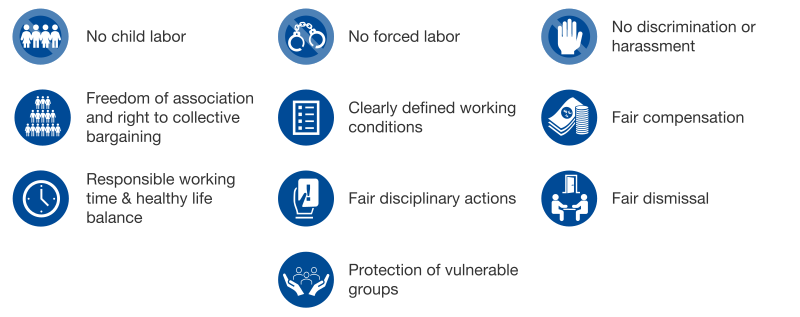
These principles apply across BASF worldwide and fall under the responsibility of Corporate Human Resources, which reports directly to the Chairman of the Board of Executive Directors. We expect all leaders and employees to comply with these principles and regularly provide internal target group-specific training on labor standards. Our risk-based management process systematically compares BASF’s international labor standards with the respective national legislation. In the event of discrepancies between national law and BASF’s international labor standards, we always strive to uphold the higher standard in all areas. If conflicts with national law arise, we aim to act in line with our values and internationally recognized principles without violating the law of the country concerned (see Engaging with employees and their employee representatives).
Individual components of our international labor standards requirements are embedded in the compliance management audits conducted by the Corporate Audit unit (see G1 Business Conduct). In addition, audits are conducted on specific topics.
Below is a more in-depth description of some of the fundamental principles and rights regarding international labor standards at BASF.
No child labor and no forced labor
BASF strictly prohibits all forms of child labor or forced labor, including slavery and human trafficking. This is also specified in BASF Group’s Policy Statement on Human Rights. These topics are part of our analyses and requirements, because we operate in countries where forms of child and forced labor exist. In 2025, there were no indications of individuals in our company being subjected to forced labor or child labor. Our disclosures on any incidents, complaints and severe human rights impacts can be found under Metrics.
No discrimination or harassment
BASF stands for respectful and fair cooperation. Any form of discrimination or degradation – including sexual harassment – based on age, ethnic background, skin color, gender, sexual orientation, gender identity or expression, national origin, religion, disability, genetic information, personal characteristics and preferences, or any other characteristic protected by law, violates our global Code of Conduct.
This governs all our employment decisions such as recruiting, hiring, promotions, benefits, disciplinary actions or terminations.
BASF is committed to equal opportunities and fosters an inclusive work environment and offers all employees fair working conditions and support in the event of any possible concerns. Our Policy Statement on Human Rights underlines our commitment to a workplace that is characterized by trust, respect and appreciation.
We are aware that certain groups of individuals may be exposed to an increased risk of disadvantage in their working life. We follow the United Nations and the International Labour Organization, which identifies people with a migrant background, members of minorities, women, nonemployee workers, people with disabilities, underage employees and people with family care responsibilities among the groups that are particularly at risk of discrimination.
If potential cases of discrimination come to our attention, for example via our grievance channels, we are committed to act immediately and take the appropriate remedial actions (see Processes to remediate negative impacts and Metrics).
When identifying leadership talents, we also take into account the promotion and appreciation of diversity, for example in the case of women. We are committed to increase the proportion of women in leadership positions worldwide to 30% by 2030. We strive to always act in accordance with the applicable local laws. As of December 31, 2025, the total proportion of women working in the BASF Group worldwide was 27.3% (2024: 27.1%). The global proportion of women in leadership positions with disciplinary responsibility as of December 31, 2025 was 29.9% (2024: 29.3%). BASF management can use a global dashboard to access information on the proportion of women in management positions at any time. Additionally, the current status is presented at Board meetings.
- More information on our activities relating to diversity, equity and inclusion
- Further information on diversity at BASF
Information on the effective recognition of the rights to freedom of association and collective bargaining is provided from Engaging with employees and their employee representatives.
- More information on our Policy Statement on Human Rights and our human rights commitment and approach
- More information on our working conditions
In the following, we explain the material topics on the basis of the results of our double materiality assessment (see Double Materiality Assessment) as well as BASF’s relevant policies and requirements.
Occupational safety and health
ESRS-Kennzeichnung:
We are aware of the great responsibility toward our employees that we bear as an employer. In order to meet this requirement, the Corporate Center unit Corporate Environmental Protection, Health, Safety & Quality establishes globally binding policies for occupational safety and health, as well as continuously reviewing and developing these policies.
These policies are based on the guiding principles of the International Council of Chemical Associations’ (ICCA) global Responsible Care® initiative and underline our target of protecting the safety, health and life of all employees in the workplace.
Our safety and health management includes all employees worldwide. Our sites and Group companies are responsible for implementing and complying with both the Group-wide and local guidelines. They are supported in this task by global networks of experts.
Our policies are continuously reviewed and further developed through comprehensive management and control systems, with the participation of our own experts for occupational safety and health, as well as global experts and government institutions. Through this approach, we aim to ensure that our guidelines are implemented consistently and effectively and that legal and regulatory requirements are complied with. By means of regular audits, the Corporate Center unit Corporate Environmental Protection, Health, Safety & Quality monitors compliance with these guidelines. Chapter E2 Pollution Reduction reports on how BASF ensures the effectiveness of the requirements in the context of the Responsible Care Management System (see E2 Pollution Prevention).
Due to our many years of expertise in the field of occupational safety and health, we are aware of the significant potential negative impacts, especially for employees who work with hazardous substances in laboratories or production plants or operate complex systems and machines. We have set ourselves clear targets to reduce the potential negative impacts for our employees to a minimum (see Challenges for engagement and retaining skilled employees). We have comprehensive actions in place for this, which are described under Occupational safety and health. Our high standards of occupational safety and health, as well as our health programs and safety training can have a positive impact beyond the professional environment.
ESRS-Kennzeichnung:
The Corporate Center unit Corporate Human Resources provides a globally consistent framework in the form of policies and requirements on the following topics:
Compensation
Continuous skill development and employee performance feedback
Leadership and leadership feedback instruments
Talent acquisition and positioning of BASF as an employer brand
International labor standards at BASF
Employee survey
The format of the employee survey is described in more detail under Global Targets. This survey is our central tool for obtaining feedback from employees. It helps us monitor the effective implementation of our requirements regarding development, talent acquisition and retention, leadership, feedback on the working environment and corporate culture, and the current status of employee engagement. We explain how the other policies are monitored in the context of the following sections.
The policies and requirements mentioned here govern the topics described in the following sections. General information on how we make our policies available and how stakeholders are involved can be found in the General Disclosures chapter of the (Consolidated) Sustainability Statement (see General Disclosures).
Adequate and competitive compensation
We offer our employees adequate, performance-related and market-oriented compensation, supplemented by attractive additional benefits. Compensation is based on global compensation principles according to position and function, market environment, personal performance and the success of BASF or the respective BASF unit. Among other things, these serve to ensure that equivalent positions are compensated in a comparable way regardless of gender, ethnic background or any other characteristics, and that the local market conditions of the respective site and differences in employee performance are considered accordingly. We describe the review of our compensation levels, including on the basis of external market data, under Actions.
As a rule, compensation comprises fixed and variable components as well as benefits. In many countries and companies, our additional benefits exceed legal requirements and include, for example, company pension benefits, supplementary health insurance and share programs. Our global compensation principles help ensure that we offer fair and competitive compensation for employees.
Loss of critical skills and competencies
Attracting and retaining skilled employees is crucial for our success. Technological change is leading to new demands being placed on our employees. Demographic change is also increasing the effort involved in procuring skilled employees. These aspects give rise to a risk for BASF that skill gaps may arise in the workforce and positions could remain unfilled.
To counter this risk, we rely on continuous learning and development. In this way, we aim to further improve the skills and knowledge of our employees, respond to changing requirements and close skill gaps.
In employee development, we follow the principle that everyone has opportunities and is supported in expanding their expertise and experience through learning. At BASF, any discriminatory practices that hinder the personal or professional development of employees are prohibited. Learning takes place according to individual and job-specific requirements and can be accomplished in different ways: individual on-the-job learning, social learning through exchange with others or formal learning in settings such as training and further education courses.
Unlocking potential through strong leadership
Our leaders play an important role in achieving our ambitious targets and making our business a success. For this reason, we expect our leaders to lead their teams and themselves accordingly and to create a competitive advantage for BASF. This requires that they act in line with our CORE values, show and promote our Winning Behaviors of the “Winning Ways” strategy, and acquire and leverage essential leadership skills. This is why, when selecting and developing our leaders, we pay attention to their handling of our values, as well as their general behavior and skills. In addition, we regularly obtain leadership feedback, giving our managers the opportunity to reflect on and improve their behavior as leaders. Furthermore, we also expect our leaders to create an inclusive working environment in accordance with local legislation.
Challenges for engagement and retaining skilled employees
BASF is faced with the challenge of attracting sufficiently qualified skilled employees and leaders and maintaining a high level of engagement among the workforce, even in economically tense times. This is made more difficult by structural adjustments and the general economic situation, which can have a negative impact on the company’s attractiveness as an employer and identification with BASF. In addition, technological change is leading to new demands being placed on our employees.
Alongside global competition for skilled workers – particularly in IT, artificial intelligence, manufacturing, engineering and the sciences – and demographic change, in regions such as North America and Europe, these developments pose a risk for BASF of not being able to fill vacancies or to do so in a timely manner.
To address these challenges, BASF is pursuing the approach of consistently positioning itself as an attractive employer worldwide and thus to attract and retain qualified employees for the company. We implement appropriate measures flexibly, tailored to local conditions (see Actions).
Our international labor standards should help to provide employees with orientation and security. They define what fair and responsible working conditions look like at our company – regardless of the site or function. These principles and rights include, for example, clear working conditions, fair and transparent processes for disciplinary actions and dismissals, protection against discrimination and harassment, as well as recognition of the right to freedom of association, collective bargaining and opportunities for participation in the company. We monitor compliance with these principles through our risk-based management process (see Human rights due diligence). For more details on this process and how employees and their representatives are generally involved in shaping their workplace, see the following section.
Engaging with employees and their employee representatives
ESRS-Kennzeichnung:
Openness is one of BASF’s corporate values. That is why stakeholder dialog is based on honesty, mutual respect and trust.
Trust-based cooperation with employee representatives is an essential component of our corporate culture (see Our Strategic Levers). Through open and continuous dialog, we create the foundation for balancing the interests of BASF and our employees, even in challenging situations. Dialog formats differ depending on region and the subject matter of the discussion. There are dedicated committees that discuss topics identified as material as defined by the European Sustainability Reporting Standards (ESRS). For example, the BASF Works Council Europe and the BASF Group Works Council are informed about the results of the double materiality assessment. Employee representatives are involved according to local legal conditions. Dialog results can be taken into account when designing and implementing our measures, which also address the material impacts in this area.
Operational responsibility for the involvement of and dialog with employee representatives lies with the management of the relevant Group company or its equivalent depending on the company’s legal form. BASF maintains constructive relationships with employee representatives which is reflected in trust-based cooperation. BASF provides the necessary human and financial resources for this dialog. There are numerous agreements with employee representatives that are applied according to local conditions in countries or Group companies. By aligning committee structures with local and regional situations, we take into account the different challenges and legal conditions for each site. In this context, we address a wide range of topics in areas such as working conditions, health and occupational safety. In addition to regular meetings in which employee representatives are informed of general topics such as the current economic situation, meetings are held on a case-by-case basis. Involving employee representatives gives BASF deeper insight into employees’ key interests and perspectives. We consider agreements such as the successful introduction of the performance management system in 2025 (see Our Steering Concept), which involved representatives of the employees and the respective companies, to be a positive result of this dialog.
In line with local conditions, our employees are entitled to freely form, join and support legally recognized unions or other forms of employee representation. These organizations are authorized to represent employees’ interests, for example in matters such as collective bargaining. BASF expressly supports these rights. We have embedded our commitment to freedom of association and the right to collective bargaining in BASF’s international labor standards (see Human rights due diligence). We do not tolerate any actions intended to disadvantage, intimidate or discourage employees because of their trade union activities. BASF is also committed to social dialog with employee representatives in countries where freedom of association is not guaranteed under national law to the same extent as under European legal systems. In such cases, individual Group companies adopt alternative dialog formats, such as informal meetings, that provide employees with opportunities for exchange.
In the case of organizational changes, for example the elimination of positions due to restructurings, or in the case of other co-determination-relevant topics, we involve employee representatives in consultation on socially responsible solutions, in accordance with existing participation rights. This would also apply if structural adjustments or other adverse effects on employees were to arise due to our transition to climate neutrality. We also rely on our leaders to explain and support all organizational changes or changes in structural measures. BASF supports affected employees in finding other positions within our company and with the development of the necessary skills. Our aim is to act in accordance with the relevant legal regulations and to observe company conditions as well as existing agreements.
We involve employees in corporate processes by offering dialog on company topics via various internal communication channels. We use these offerings to inform them of upcoming organizational changes and engage them in relevant discussions. For example, we generally hold a quarterly global information event with members of the Board of Executive Directors, in which employees can participate on-site or virtually. Following a presentation of strategically important content by the Board of Executive Directors, employees have the opportunity to ask questions.
In order to actively involve employees in shaping their working environment, we rely on multiple feedback instruments, which we explain under Unlocking potential through strong leadership and Global targets.
In accordance with local legal conditions, we also offer employees the opportunity to get involved in one of our many Employee Resource Groups, which are organized voluntarily by interested colleagues. This includes groups of individuals who potentially experience more frequent discrimination. For example, there is a global employee resource group for women at BASF and different local employee resource groups for the LGBTQI+ community and people with disabilities. All interested employees can get involved in these networks.
Processes to remediate negative impacts and channels for own workers to raise concerns
ESRS-Kennzeichnung:
The BASF Compliance Hotline as a grievance mechanism is not only open to all BASF employees, but also to external stakeholders, especially workers in our value chains. For more information on how the problems raised and addressed via this hotline are tracked and monitored, see G1 Business Conduct. In addition to our grievance mechanisms, employees can reach out to their leaders, their compliance officers or the human resources department as well as their respective employee representatives to ask questions or raise concerns about potential misconduct.
Our compliance training program, which includes regular global and local information campaigns as well as details about our Compliance Hotline, is mandatory for all employees. Training and information offerings that provide specific knowledge on human rights and international labor standards to various target groups worldwide also cover the topic of compliance and the BASF Compliance Hotline.
Actions
ESRS-Kennzeichnung:
We address the impacts, risks and opportunities that we identified as material through various actions, which we outline below using the subtopics material to this chapter. We employ the following key actions:
Safety and health training for employees
Risk assessments and risk analyses as well as incident investigations supplemented by root cause analyses
Global health management: e.g., BASF health checks
Annual compensation level review
Feedback talks between employees and leaders
Leadership development and feedback
Annual measurement of engagement in the employee survey
The Corporate Center units Corporate Environmental Protection, Health, Safety & Quality and Corporate Human Resources provide the conceptual framework. Additional resources to implement the actions are usually made available by the Global Business Services unit as well as teams working in the operating divisions and at our sites. For example, health initiatives as well as local recruiting activities and education programs are carried out at the respective sites.
Occupational safety and health
We use risk-based methods to prevent potentially negative impacts on the safety and health of our employees. These include risk assessments and risk analyses, guidelines for safe behavior in the workplace, formalized incident investigations supplemented by root cause analyses, structured assignment and implementation of corrective measures as well as a transparent exchange of experience within our global network. We also seek dialog with government institutions and are actively involved in external occupational safety initiatives and networks around the world led, for example, by the European Chemical Industry Council (CEFIC) or national associations such as the German Chemical Industry Association and the American Chemistry Council. For this reason, we are constantly refining and enhancing our global requirements and training regarding occupational safety. In addition to legally required training, BASF Group employees receive additional and complementary safety and health training tailored specifically to their role, working environment and location. For example, production employees receive regular training in the safe handling of chemicals, the correct selection and use of personal protective equipment, and emergency management.
Across all BASF divisions, units work regularly together to develop effective campaigns that are intended to continuously raise awareness of specific safety issues, with the clear goal of reducing or preventing incidents and injuries at work. For example, in the 2025 business year, Global Engineering Services conducted a campaign with a focus on activities in plant engineering that are associated with a higher risk for employees. The aim of the campaign was to raise awareness of potential hazards and to significantly reduce the risk of incidents at work through targeted training. Leaders have a decisive role model function in safety culture, and bear a special responsibility for this topic in production. They regularly receive specific training in order to fulfill this task and to further strengthen the safety culture in the company.
BASF thoroughly investigates incidents, analyzes the root causes, and uses the findings to develop appropriate mitigation measures and achieve continuous improvements. If increased risks for employees are identified, we implement the appropriate corrective and mitigation actions.
These actions are an important part of our occupational health and safety management strategy (see the following section) to promote the safety, health and well-being of our employees. Through them, we want to have a positive influence on the physical and mental health as well as the long-term performance of our employees. This potential positive impact may also extend beyond the workplace.
BASF’s global corporate health management serves to promote and maintain the long-term and holistic health and performance of our employees. With the BASF health check, we offer our employees a regular, thorough medical examination with extensive diagnostic measures. An essential component is the detailed medical consultation with a special focus on cardiovascular risk factors, which can be significantly influenced by lifestyle. With this program, we want to support employees in actively protecting and improving their health in the long term. In addition, depending on the region, employees may have access to other medical services that provide additional support for their individual health needs. In 2025, as in the previous year, our focus was on mental health. At the center of the global health initiative was the Mental Health Alliance, an information and self-learning platform that imparts knowledge on mental health, prevention and the destigmatization of mental illness. We also offer employees a wide range of materials, training courses and individual support to promote mental health in the workplace and in the personal sphere. In addition, we are focusing more strongly on the topic of women’s health worldwide and are developing specific offers to provide employees with targeted support at every stage of their lives, to strengthen their health and to maintain their long-term work ability. Another key focus in 2025 was influenza prevention. BASF employees had the opportunity to be vaccinated against the seasonal flu at numerous sites worldwide. At the Ludwigshafen site in Germany, for example, more than 4,300 employees participated in the influenza vaccination campaign.
Adequate and competitive compensation
Adequate wages are an important component of the package we offer to employees that makes us a compelling choice as employer. We review our compensation levels worldwide annually in close cooperation with local units, including on the basis of external market data. This allows us to aim for market-oriented and adequate compensation in the respective countries or markets and to analyze the effectiveness of adjustments to our compensation levels as part of the process.
In addition, we promote adequate and competitive compensation through further processes and offers. Based on defined, globally uniform criteria, positions are classified into BASF job grades, which form the basis for compensation, independent of the individual. The classification is based on the requirements of the relevant function. In this way, we want to make positions globally comparable and create the basis for compensation commensurate with function. In numerous Group companies, our “plus” share program ensures employees’ long-term participation in the company’s success through incentive shares. In addition, we have introduced an enhanced performance management system in 2025 that provides a closer link between incentives and unit-specific achievements (see Our Steering Concept).
We regularly review whether employees are receiving adequate wages as defined by the ESRS. We report the result of this review in the Metrics section under S1-10.
Loss of critical skills and competencies
Employee development is organized in collaboration with the respective leader. The central element here is the regular dialog in feedback talks (before 2025: employee dialog) between employee and leader, which take place worldwide and at least once a year. Here, performance, behavior and development are discussed together. On the one hand, it is about reflecting on the past year, and on the other hand, discussing expectations. Leaders and employees can agree development goals and individual learning needs. Here, learning goals should be aligned with the specific job requirements and the employee’s development needs. Learning can take place in different formats and in different locations, thus helping to further develop important competencies in the company.
In addition, BASF provides global access to a wide range of training offerings on various learning platforms to support employees in expanding their skills and thus acquiring additional competencies. Furthermore, numerous local and specialized academies offer training courses within the operating divisions and service units. An example of this is the expanded offer of the Data & AI Academy, which helps our employees to develop their understanding of data and artificial intelligence (AI) and leverage it in their work processes. The increased use of AI in our databases also makes it easier for employees to find information and build up valuable knowledge.
In the future, leaders and employees will be able to gain easier insight into the skills and competence gaps of their teams. To this end, BASF integrated AI-supported skills and competencies management into existing HR systems in selected areas in 2025. This transparency makes it possible, for example, to specifically identify qualification requirements and to allocate individual training offerings tailored to the needs of employees and teams.
We monitor the effectiveness of our actions by conducting regular surveys among our employees (see Global Targets).
Unlocking potential through strong leadership
With a wide range of targeted training and development opportunities for leaders at all levels, we want to contribute to the competitiveness of BASF in the long term. We provide leaders with these opportunities for each phase of their career as well as various formats that enable them to learn from each other and from external experts. We thus offer our leaders a mixture of essential standard training courses, as well as varying focus topics and on-demand offerings.
We aim to develop leaders who manage their teams with professional competence, positivity, empathy and trust, and in this way, create a competitive advantage for BASF. In 2025, we therefore offered inspiration and learning formats for senior executives and talents identified as potential leaders under the focus topic of feedback culture, for example on how open and constructive feedback can motivate employees to perform at a high level and promote growth. Furthermore, all leaders were offered training courses designed to promote both the ability to give feedback and how to consequently handle both strong and low performance. Regular feedback plays an important role in the individual development of leaders. In 2025, the majority of our leaders with disciplinary responsibility received feedback on their leadership behavior as well as development advice as part of the global leadership feedback survey.
To identify and further develop leadership talents at an early stage, BASF also employs potential assessments. In this way, we want to identify potential leaders and develop them in a targeted manner.
Challenges for engagement and retaining skilled employees
Through regular global surveys of our employees, we want to find out how they perceive BASF. Feedback from this survey and from our dialog with employee representatives gives us specific indications as to where we can make further improvements (see Global Targets).
The shift toward a Winning Culture (see Our Strategic Levers) will be a decisive factor in the successful implementation of our “Winning Ways” strategy. As our business grows, we create the foundation for job security and attractiveness as an employer. In this way, we also want to strengthen the engagement of our workforce and attract and retain skilled workers. The Winning Behaviors, i.e., behavior for success, pave the way for this. The results of a global survey in 2025 on the implementation of the strategy show that employees have already developed a high level of understanding of these behaviors.
In light of the global competition for suitable skilled employees and leaders, we maintain a range of processes and projects to attract new employees. For example, in 2025 we launched a campaign in Germany, Brazil, China, India and the United States to more effectively reach and attract talent to BASF. To meet our need for highly demanded employees, we run various local events and programs during the business year as part of our employer branding. These include our trainee program with a focus on the use of artificial intelligence and the Top Start program, with which we attract future leaders and train them specifically at BASF. Training skilled employees is a central investment in BASF’s competitiveness. This is why we have been counting on developing our own skilled employees for many years and are particularly committed to our apprenticeship programs in Germany. To continue filling our apprenticeship positions with qualified candidates in the future, we provide school students in Germany with insight into the various apprenticeship options at BASF during their career orientation phase. At production sites in the United States, we provide up to three years of dual-track vocational training under the North American Apprenticeship Development Program (NAADP). In addition, we implemented the dual study model at various German locations. Our actions to recruit skilled employees are based on the principle of nondiscrimination (see No discrimination or harassment).
Global Targets
ESRS-Kennzeichnung:
We set ourselves concrete global targets regarding the potential positive and negative impacts on the health and safety of all employees, the progress of which we measure annually.
We measure our performance in the area of occupational safety by the number of High Severity Work Process Related Injuries (HSI) worldwide. We have set ourselves the target of a global HSI rate of no more than 0.05 High Severity Work Process Related injuries per 200,000 working hours by 2030.2 The introductory year 2023 serves as a reference value at 0.03. In 2025, the HSI rate was 0.01 (2024: 0.02). We have once again achieved our target. The target is based on the assumption that all work-related injuries are documented completely and correctly. There is a potential limitation due to possible delays in the reporting and documentation of work-related injuries. For more information on the collection of data on occupational health and safety, see the chapter General Information. Through regular Responsible Care audits, which check compliance with internal and legal requirements in the field of occupational safety, we help to prevent work-related injuries (see Responsible Care Management System).
Our performance in terms of health is measured by the Health Performance Index (HPI). The HPI defines and measures our efforts to promote and maintain the health, performance and well-being of all employees and is calculated on a scale from 0.0 to 1.0 (maximum index value). It consists of five equally weighted components: recognized occupational diseases, medical emergency preparedness, first aid, preventive medicine and health promotion. Each component accounts for 20% of the overall result. Our target is an annual HPI of 0.9 (base year 2018: 0.96). We once again achieved this in 2025 with an HPI of 0.97 (2024: 0.97). The target is based on the assumption that the health data collected is representative of the workforce, that participation in the voluntary health programs is far-reaching and that its effects on the well-being of employees are measurable and significant. As not all health aspects can be mapped and external influences can falsify the results, there are potential restrictions. The target of the HPI is reviewed by regular Responsible Care audits in the field of occupational health. The audits focus on compliance with medical standards and health. Each site of a relevant size or greater is audited at regular intervals. The audit report documents the findings as well as the agreed corrective actions with clearly defined deadlines, the implementation of which is continuously monitored. If necessary, the specialist units can be actively involved in consultation and supporting implementation of the measures. Furthermore, HPI is monitored in several stages through analyses of incident and illness data as well as targeted measures to reduce the health risk in the future. To further develop the target, BASF’s global network of physicians will be involved.
BASF continuously derives measures on the basis of the HPI and HSI to improve occupational safety and health in a targeted manner. This includes the analysis of incidents, first aid training and safety campaigns that can raise awareness of safety and help employees to react appropriately in an emergency situation, both in their professional and private lives.
In addition, we consider employee engagement to be a decisive indicator of the success of our actions. To verify this, we rely on regularly obtaining candid and constructive feedback. All employees are invited on a regular basis to give feedback on their working environment and the corporate culture as part of our employee survey. In the employee survey3, BASF measures employee engagement based on five central questions. Our Engagement Index derived from this is intended to clarify whether employees wish to contribute to the objectives of BASF, enjoy and are proud of working with us, whether they recommend BASF as an employer, and whether they would stay with us if they received a similar offer from another company. These questions help us identify potential for improvement. They were developed by BASF based on an analysis of scientific findings and benchmarks. In accordance with co-determination rights, we engage with employee representatives in the course of approving the questionnaire regarding the configuration of the Engagement Index.
We have set ourselves the target of achieving an Engagement Index of more than 80%. We identified the target value based on an external benchmarking. The results are evaluated using both statistical and qualitative correlation analyses, in which the main factors influencing engagement are identified on the basis of the survey results and then examined in more detail with regard to possible actions. This analysis is carried out at global and decentralized levels. The respective organizational units’ results are evaluated centrally and aggregated to provide leaders with concrete indications of strengths and potential improvements. Overall, we still see room for improvement in the results of the survey for the 2025 business year. Worldwide, nearly 85,000 employees participated in the survey (participation rate: 75%, 2024: 78%). The survey showed a global Engagement Index of 77%, which was a slight decrease compared to the previous year (2024: 79%). Our aim is to increase this score to the defined target value of higher than 80%.
The results of the employee survey are communicated to employees, leaders, the Board of Executive Directors, and the Supervisory Board using various dialog formats (see Engaging with employees and their employee representatives). The results are discussed between leaders and employees, for example in workshops. This allows questions to be clarified and necessary improvement measures to be discussed. Through a decentralized approach, we can address the multifaceted needs of our organization with different strengths and areas of development. The results can also be considered in strategic decisions. For example, surveys indicated that processes were perceived to be too complex or bureaucratic. This is one of the reasons why we are focusing on becoming faster and more agile, and empowering employees with greater accountability in our strategy (see Our Strategic Levers).
We review the positive impact of adequate wages on a regular basis through specific actions, which are described under Adequate and competitive compensation. We address the risks regarding the loss of critical skills and competencies, the securing of skilled workers, and the opportunities offered by unlocking potential through strong leadership with specific actions (see Loss of critical skills and competencies). We have not set ourselves specific targets for all aspects of material impacts as well as risks and opportunities for our company’s workforce. For more information on how we measure the effectiveness of implemented actions, see the section Actions.
2 Includes BASF employees, agency workers and contractors. We are reviewing the extent to which we can take account of the definition of the company’s workforce according to ESRS in the future.
3 The scope of employees participating in the survey goes beyond the scope of consolidation. However, there are some exceptions for companies that represent joint ventures and joint operations, as well as companies held for sale.
Metrics
ESRS-Kennzeichnung:
The total number of employees as of December 31, 2025 was 108,251. This is a decrease compared to the number of 111,822 employees as of December 31, 2024. The decline was primarily due to departures in connection with the ongoing cost savings programs and as part of the divestiture of the Brazilian decorative paints business. The number of employees includes employees of the discontinued coatings business. As of December 31, 2025, the number of employees was 9,928 (2024: 10,122).
Expenses for wages and salaries, social security contributions and assistance, as well as for pensions in 2025 are reported in the Notes to the Consolidated Financial Statements under Note 27.
The following table illustrates the regional distribution of employees. We employed at least 10% of the BASF workforce in each of the three countries Germany, China and the United States. As of December 31, 2025, the total number of employees at BASF SE was 32,190.
Regions |
Europe |
Asia Pacific |
North America |
South America, Africa and Middle East |
Total |
|||||||||||||||||||
|---|---|---|---|---|---|---|---|---|---|---|---|---|---|---|---|---|---|---|---|---|---|---|---|---|
|
2025 |
2024 |
2025 |
2024 |
2025 |
2024 |
2025 |
2024 |
2025 |
2024 |
||||||||||||||
Employees |
65,073 |
66,726 |
21,592 |
21,971 |
15,652 |
15,969 |
5,934 |
7,156 |
108,251 |
111,822 |
||||||||||||||
|
|
|
|
|
|
|
|
|
|
|
||||||||||||||
|
|
|
|
|
|
|
|
|
|
|
||||||||||||||
Of which countries with 10% or more of the total workforce |
Germany |
Greater China |
United States |
|
|
|
|
|||||||||||||||||
|
2025 |
2024 |
2025 |
2024 |
2025 |
2024 |
|
|
|
|
||||||||||||||
Employees |
48,955 |
50,602 |
12,452 |
12,687 |
13,045 |
13,304 |
|
|
|
|
||||||||||||||
|
||||||||||||||||||||||||
We use the following definitions globally for employees in our company:
Permanent employees have an active contract for an unlimited period of time.
Temporary employees are employed by BASF on the basis of an individual agreement with a temporary employment contract.
Apprentices are employees who have a temporary contract with BASF. In accordance with this contract, apprentices receive in-company vocational training as part of an accredited education program.
|
Male |
Female |
Not disclosedb |
Total |
||||||||||||||||||||
|---|---|---|---|---|---|---|---|---|---|---|---|---|---|---|---|---|---|---|---|---|---|---|---|---|
|
2025 |
2024 |
2025 |
2024 |
2025 |
2024 |
2025 |
2024 |
||||||||||||||||
Employees (total) |
78,717 |
81,572 |
29,534 |
30,250 |
0 |
0 |
108,251 |
111,822 |
||||||||||||||||
Permanent employees |
75,530 |
78,081 |
28,063 |
28,695 |
0 |
0 |
103,593 |
106,776 |
||||||||||||||||
Temporary employees |
1,095 |
1,183 |
900 |
922 |
0 |
0 |
1,995 |
2,105 |
||||||||||||||||
Apprenticesc |
2,092 |
2,308 |
571 |
633 |
0 |
0 |
2,663 |
2,941 |
||||||||||||||||
Non-guaranteed hours employees |
0 |
0 |
0 |
0 |
0 |
0 |
0 |
0 |
||||||||||||||||
|
||||||||||||||||||||||||
The rate of employee turnover, i.e., the proportion of employees who left the company in 2025, amounted to 7.5% globally (2024: 7.2%). We adhere to the ESRS definition, which includes voluntary and involuntary leaves, retirements, and deaths in service.
ESRS-Kennzeichnung:
We reviewed adequate wages at BASF Group companies in accordance with the ESRS definition. The review included the respective base salary and fixed guaranteed additional payments in the business year. Calculation of adequate wages in accordance with ESRS is not based on an annual target value.
For the year 2025, the review concluded that all employees receive adequate wages.
ESRS-Kennzeichnung:
|
2025 |
2024 |
||||||||||
|---|---|---|---|---|---|---|---|---|---|---|---|---|
Number of fatalities as a result of work-related injuries and work-related ill health |
0 |
0 |
||||||||||
3.94 |
3.78 |
|||||||||||
Number of recordableb work-related injuries |
772 |
753 |
||||||||||
Number of cases of recordableb work-related ill health |
17 |
33 |
||||||||||
Number of days lost to work-related injuriesc |
5,861 |
6,223 |
||||||||||
|
||||||||||||
Safety is our highest priority. No fatal work-related injuries were recorded in 2025. We rely on extensive measures to prevent further work-related injuries.
ESRS-Kennzeichnung:
In 2025, 82 cases of employees who experienced discrimination were reported to us (2024: 79). These were related to gender, age, nationality, disability, religion or worldview, sexual orientation or ethnicity. They were racist in origin or related to other relevant forms of discrimination based on characteristics protected by law, including harassment as a specific form of discrimination.
In addition, 263 complaints (2024: 225) related to the social factors or aspects4 mentioned in ESRS S1, paragraph 2, were submitted via the BASF compliance grievance mechanism in the reporting period.
In 2025, there were no fines, sanctions or compensation payments in connection with these incidents, and we identified no severe human rights-related incidents in relation to workers in our company (2024: 0).
4 These social factors or aspects include working conditions, equal treatment and opportunities as well as other work-related rights. For more information, see ESRS S1, paragraph 2.
Here you can find a comprehensive overview of the abbreviations and definitions used in the ESRS.