
Material Investments
The content of this section is not part of the statutory audit of the annual financial statements but has undergone a separate limited assurance by our auditor.
The content of this section is voluntary, unaudited information, which was critically read by the auditor.
Continuous investments in our plants provide the basis for achieving the organic growth we strive for in our core businesses. We invest in ensuring the safety of our production facilities and securing our license to operate. In addition, we are driving the use of new technologies to enable our own green transformation and that of our customers. At the same time, we are taking measures to increase the efficiency of existing production processes and thereby to improve the profitability and competitiveness of our operations.
For the period 2026 to 2029 we are planning capital expenditures1 of around €13 billion. Having reached a record level of capital expenditures in 2024, mainly due to the establishment of the Verbund site in Zhanjiang, capital expenditures in 2025 were significantly below the prior-year figure at around €4 billion. For 2026, we anticipate a further decline to around €3 billion; the investment volume is thus expected to be below the level of depreciation and amortization, as planned (for more information on our future investments).
In 2025, we focused our investment projects on the expansion of our position in our three key regions: Asia Pacific, North America and Europe. The Asia Pacific region, especially China, is making a significant contribution to the growth of the global chemicals market with a share of almost 70%. We expect that over 80% of growth in the chemical industry will be concentrated in this region by 2035. By establishing our new integrated Verbund site in Zhanjiang we aim to participate in this development and serve the increasing demand from various growth industries in this region. We manufactured the first products from the Verbund there in November 2025. Commissioning of the steam cracker commenced at the end of December 2025. We also continuously invest in the ongoing development of our other Asian sites (see table Overview of material investments).
The expansion of our production capacities in the isocyanates value chain in Geismar, Louisiana, BASF’s largest standalone investment in North America, remains on schedule and is set for startup in 2026. This will increase BASF’s production capacity for methylene diphenyl diisocyanate (MDI) in North America from 380,000 metric tons per year to around 600,000 metric tons per year.
We are also strengthening our sites in Europe. At the Verbund site in Ludwigshafen, for example, we have started construction of a new production plant for semiconductor-grade sulfuric acid as well as a new plant for electronic-grade ammonium hydroxide. After the planned startups of the plants in 2027, the new capacities are expected to meet the growing demand from the European semiconductor industry while strengthening the resilience of supply chains for the European semiconductor sector.
Investments in the segments and regions
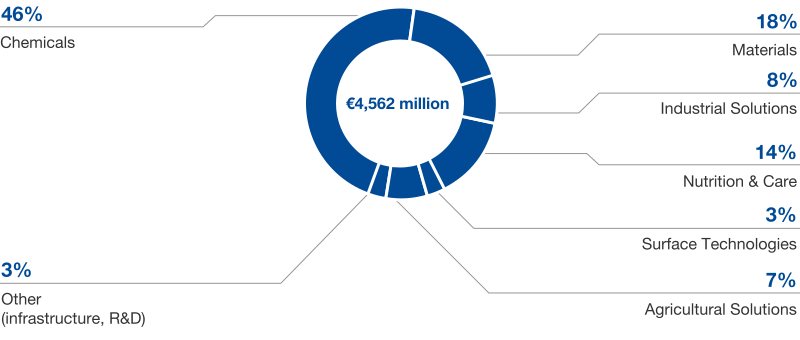
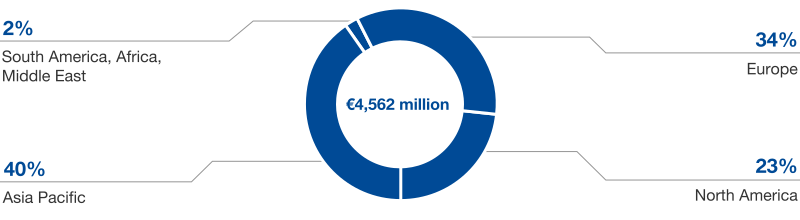
In 2025, investments in property, plant and equipment (including restoration obligations, IT investments and right-of-use assets arising from leases) amounted to €4,562 million (2024: €6,506 million). Capex accounted for €4,027 million of this amount (2024: €5,996 million). Our investments in 2025 focused on the Chemicals, Materials and Nutrition & Care segments.
Additions to property, plant and equipmenta by segment in 2025
Additions to property, plant and equipmenta by region in 2025
Segment |
Location |
Project |
Startup |
|||||||||
|---|---|---|---|---|---|---|---|---|---|---|---|---|
Chemicals |
Ludwigshafen, Germany |
Expansion of production capacity of Neopor® |
2027 |
|||||||||
Modernization of the chloroformates and acid chlorides plant |
2026 |
|||||||||||
Zhanjiang, China |
Construction of a new steam cracker and plants for ethylene oxide, syngas, monoethylene glycol, polyethylene, C4 oxo alcohols, acrylic monomers and neopentyl glycol |
2025–2026 |
||||||||||
Materials |
Geismar, Louisiana |
Capacity expansion at the MDI plants |
2026 |
|||||||||
Ludwigshafen, Germany |
New alcoholates plant (sodium methylate, potassium methylate) |
2027 |
||||||||||
Dahej, India |
Construction of a new production plant for Cellasto® |
2026 |
||||||||||
Schanghai, China |
Construction of a new production plant for Cellasto® |
2027 |
||||||||||
Industrial Solutions |
Nanjing, China |
Capacity expansion at the additives production plant |
2025 |
|||||||||
Lampertheim, Germany and Pontecchio Marconi, Italy |
Capacity expansion for hindered amine light stabilizers (HALS) |
2026 |
||||||||||
Ludwigshafen, Germany |
Construction of a new production plant for additively manufactured catalysts |
2026 |
||||||||||
Capacity expansion of polyisobutene plant |
2026 |
|||||||||||
Construction of a new production plant for semiconductor-grade sulfuric acid |
2027 |
|||||||||||
Construction of a new production plant for electronic grade ammonium hydroxid |
2027 |
|||||||||||
Nutrition & Care |
Bangpakong, Thailand |
Construction of a new production plant for alkyl polyglucosides |
2025 |
|||||||||
Cincinnati, Ohio |
Construction of a new production plant for alkyl polyglucosides |
2026 |
||||||||||
Holthausen, Germany |
Construction of a new production plant for multi-purpose reactor, production of emollients and other specialties, mainly for personal care markets |
2025–2026 |
||||||||||
Ludwigshafen, Germany |
Construction of new production plants for menthol and linalool |
2026 |
||||||||||
Zhanjiang, China |
Construction of a new production plant for citral |
2026 |
||||||||||
Construction of a new production plant for nonionic surfactants |
2026 |
|||||||||||
Surface Technologiesa |
Münster, Germany |
Construction of a new production plant for more sustainable automotive paints |
2025 |
|||||||||
Würzburg, Germany |
Capacity expansion for automotive paints |
2025 |
||||||||||
Agricultural Solutions |
Beaumont, Texas und Hannibal, Missouri |
Modernization of site infrastructure |
2027 |
|||||||||
Europeb |
Traceability of crop protection products based on digital identification |
2025 |
||||||||||
Ludwigshafen, Germany |
Construction of a new fermentation facility for sustainable crop protection products |
2025 |
||||||||||
|
||||||||||||
1 Additions to property, plant and equipment excluding acquisitions, restoration obligations, IT investments and right-of-use assets arising from leases